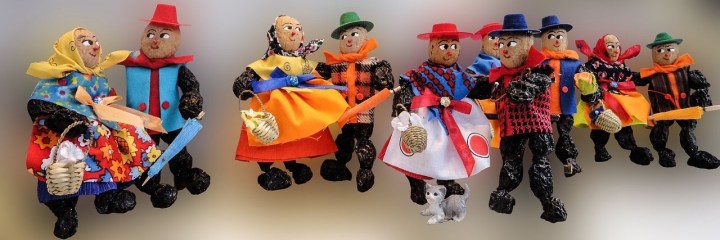
For decades the “Zwetschgemännle”, which are popular figures from dried Prunes and Figs that can be found at the colorful world of the Christkindlesmarkt
There are over 350 different figures – from “Nackerte” (Naked) to “Schlotfeger” (Chimney sweeper) to Lovers
The Zwetschgemännle, or “Prune Man,” is a traditional German Christmas figure. It is often found at Christmas markets, particularly in regions such as Baden-Württemberg. This unique character is made from dried plums (Zwetschgen). It represents a whimsical figure often dressed in colorful clothing. The figure may be adorned with various accessories like hats and scarves.


The Zwetschgemännle is not only a festive decoration but also a tasty treat. It symbolizes the end of the harvest season and is a nostalgic reminder of German traditions. These figures are sometimes used as gifts or decorations during the holiday season and are appreciated for their handcrafted charm.
In addition to being aesthetically pleasing, Zwetschgemännle is edible, often enjoyed as a sweet snack or used in baking and cooking. The presence of such figures adds to the cheerful atmosphere of Christmas markets, celebrating both culinary heritage and festive spirit.

The production of the figures is just as time-consuming as exhausting. It can take an hour to make a plum-man or woman, or even longer in special cases. As holding skeleton wires are used, which are inserted into a birch wood disk. Dried prunes serve as legs and arms, figs form the belly. For the head walnuts are used, as smooth as possible, so it is easier to paint a face. Put on a pointed hat – you already have the “Nackerten” or naked man.
There are hundreds of Gnomes and bass Violin players. You will find Guitarists and Pianists, Cooks and Waiters as well. There are also Mushroom pickers, Pastors, and even Devils. The characters are nine to 22 centimeters tall, and gathers on the display tables of the Christmas booths.

History of the Zwetschgemännle
It is said, the Zwetschgemännle have been invented in the 18th century by a Nürnberger wire-puller who wanted to make children happy. He had nothing but wire and a plum tree in front of the house, so he made little Prune figures of it. The children could eat these, which is no longer the case nowadays. “Not suitable for consumption” is now written on signs of the Zwetschgenmännle huts.
The Prune figures hardly need care, occasional dusting should be enough. When the body turns grey, it is not mold, but fructose. It can be quickly removed with a brush and alcohol.