Nestled along the winding Moselle River, where vineyards kiss the hillsides and medieval charm lingers in every cobblestone, lies the fairytale village of Beilstein, often called the Sleeping Beauty
Beilstein is described by many tourists as the most beautiful town at the Moselle, and it also became clear to me while walking through the romantic cobblestone streets or alleys
From Cochem to Beilstein: A River Journey Begins
The day began with a scenic drive to Cochem, a lively town crowned by its majestic Reichsburg Castle. I parked my car near the river promenade, where the air was already tinged with the scent of grapes and river breeze. At 1 PM sharp, I boarded a boat bound for Beilstein—a gentle cruise that felt like slipping into a storybook.

As the boat glided past terraced vineyards and sleepy villages, the Moselle shimmered under the afternoon sun. The pace was slow, deliberate, almost ceremonial. It gave me time to breathe, to watch, to anticipate.
Once arrived at the landing it took about a 5 minute walk into old town Beilstein
Arrival in Beilstein: A Village Frozen in Time
Stepping off the boat, Beilstein greeted me with ivy-clad facades, half-timbered houses, and winding alleys that begged to be explored. The village is small—just a handful of streets—but every corner holds a whisper of history. Metternich Castle looms above, a silent guardian of centuries past.


For centuries, the town lived from wine growing, a viticulture that is dying. Whatever is left of Moselle Vintners, many get subsidized by the state. Now Tourism in particular, has replaced the important source of income for the many cafes, restaurants and accommodations.
I wandered through narrow lanes where flower boxes overflowed with geraniums and wrought-iron signs creaked softly in the breeze. The silence was golden, broken only by the occasional clink of wine glasses or the laughter of fellow wanderers.


Beilstein is relatively compact and easy to explore on foot, it really isn’t that big. Everywhere I walked were cobbled and winding streets with beautifully restored half-timbered houses lovingly decorated with flowers. I really liked the picturesque market square from anno 1322.
Coffee, Cake, and Contentment
Eventually, I settled into a cozy café tucked beside the market square. The terrace overlooked the river, and I ordered a slice of plum cake with a generous dollop of whipped cream, paired with a strong cup of coffee. It was the kind of moment that makes you forget time exists.
As I sipped and savored, I watched the boats drift by and the sun begin its slow descent behind the hills. Beilstein doesn’t demand attention—it earns it quietly, with grace and charm.

Beilstein at the Moselle 
Zollhaus, Old Costums house 
A popular restaurant 
Entrance to a wine bar 
Romantic alleys 
Exploring historic buildings 
Sipping coffee at the Market place 
Grape Vines everywhere 
Terrasses at wine restaurants Marketplace 
View to the Moselle river 
A typical wine cellar and bar 
Town hall 
Inviting menu 
The stairs lead a Monastery (Klostertreppe) 
Romantic buildings 
Tight alley ways 
Resting and drinking a Riesling wine 
Picture taken from Metternich castle (by Wikimedia) 
Beilstein at the Moselle, a century ago

It is quite manageable strolling through the tight alleys these days with less tourists (due to Covid). The narrow buildings and the well-frequented restaurants and cafés have a very special charm. The former “Zehnthaus” on the market square, the former parish church of St. Christopher and the old “Fürstgräfliche Kellnerei”, a waiter shop from the 18th century are also worth seeing.
Winzerschenke: Rustic Roots Beneath the Klostertreppe
Tucked at the foot of the iconic monastery steps, Winzerschenke has long been a favorite among locals and wanderers alike. With its vine-draped terrace and cozy timbered interiors, it’s more than a restaurant—it’s a warm embrace after a day of strolling Beilstein’s alleys.
Here, the Mosel wine flows generously, and the kitchen serves up hearty, homemade specialties. One dish that’s earned cult status is Marie Luise Sausen’s legendary warm Speckkartoffelsalat—a rustic potato salad with bacon that tastes like comfort itself.

But Winzerschenke isn’t just about food. It’s about atmosphere. It’s about sitting beneath the climbing vines, watching the sun dance on the river, and feeling time slow down.
Climbing up the stairs to the Klosterschenke terrace, I had the most beautiful views.

There were hardly any structural changes in Beilstein until the 20th century, certainly one of the reasons why the very well-preserved medieval townscape still exists today. Only about 140 people live in town, many tourists come to visit every day and liven up the streets.
Burg Metternich
You can walk up the Metternich castle or ruin via a steep climb directly from the city, or drive and park your car there and then walk about 5 minutes on a moderate footpath to the castle. The castle ruins are located on a 60 m high rock ledge that drops steeply on three sides.
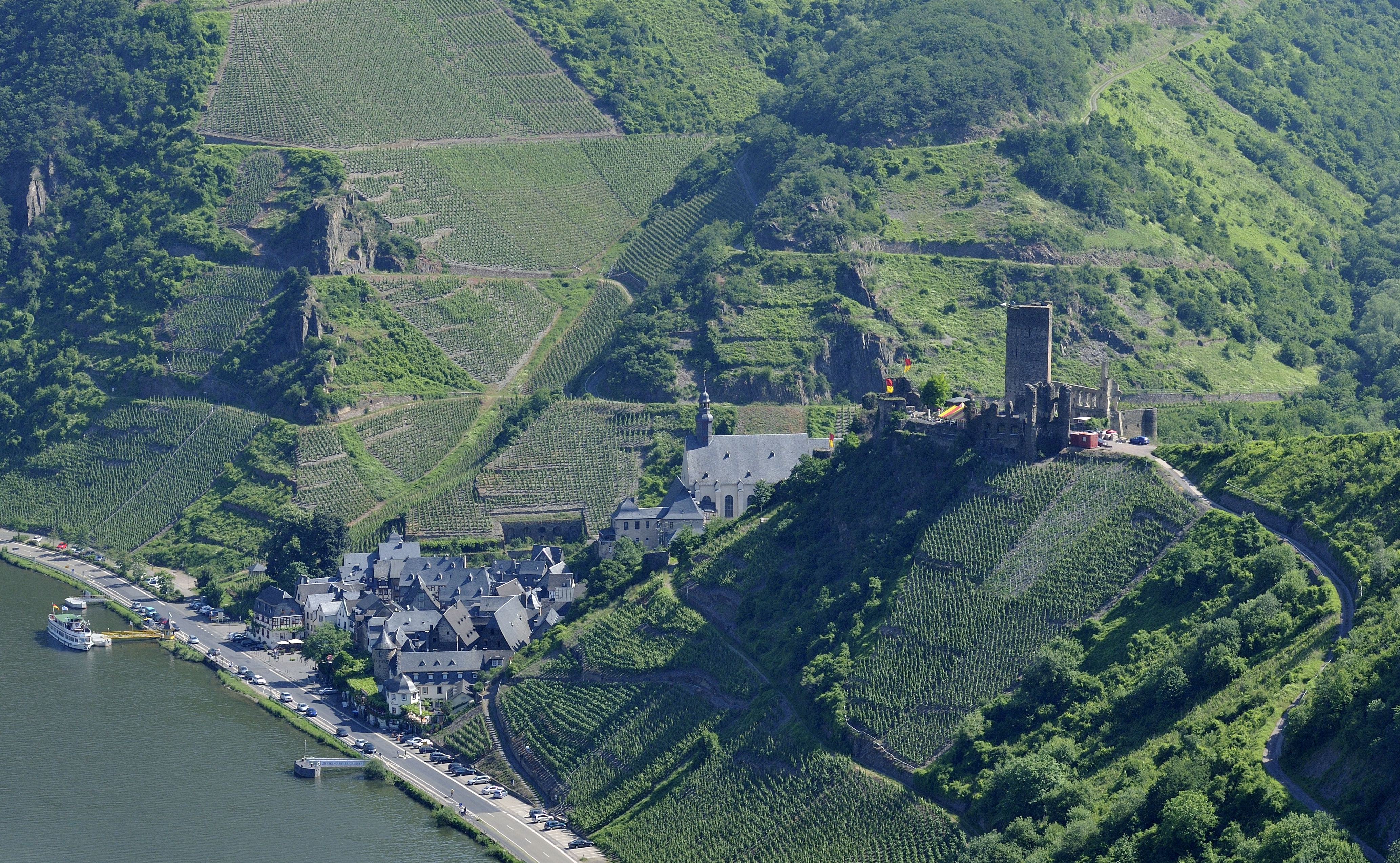
Beilstein is towered by the ruins of Metternich Castle, which I admired looking up from below. The history of the castle goes back to the year 1268, when it was first mentioned in old documents
The Sign below reads:
The castle was mentioned first in 1268. It was possibly built by Walter von Braunshorn. After the demise of the Braunshorn family in 1363 the castle had a new owner, Cuno von Winneburg und Beilstein. In 1634 the castle was occupied by the Spanish and Swedes. After the Winneburgers died in 1637 the castle was given to the Lords of Metternich.
On 27th February 1689 the beautiful castle was destroyed by the French (Ludwig XIV) under Baron Montalt, then again more destruction on 12. October the same year. The last Ownership was under the Austrian State chancellor Klemens Wenzel Lothar, and later Prince of Metternich


Since Beilstein is a small compact town, I concluded my visit there after about 2 hours of walking and a glass of Riesling at one of those wine bars. After getting back to my car I drove across a bridge to Cochem where I spent the rest of my afternoon.
Reflections on a Fairytale Escape
Beilstein is not a place you visit. It’s a place ou feel. It’s the kind of village that lingers in your memory like the scent of wildflowers or the echo of church bells. Whether you stay for an hour or a day, it leaves you enchanted.