This outing was included in our journey that concluded in Paris. We arrived in Ghent in 2013 on a cloudy day, following four months of intermittent rain. The first sight that caught our attention was a sea of bicycles at the train station. We made our way to our B&B, “A Bed in Ghent,” hosted by Tom de Wolf. He welcomed us warmly and helped carry our luggage up the stairs.
The room was retro and comfortable. I remember it had a records and a record player from Beatles and such, basically 70ties music. After discovering Ghent on 48 hour city pass, Museums, castle and boat rides, we took a day trip to Brugge. Ghent is conveniently located between Brussel and Brugge.
Ghent is a port city in northwest Belgium where the rivers Leie and Scheldt rivers meet. In the Middle Ages, Ghent was a powerful city. Today the university town is a center of cultural activities. The traffic-calmed city center is known for its medieval architecture, such as Gravensteen Castle from the 12th century and the buildings on the Graslei, a series of guild houses on the Leiehafen.

Bruges, or Brugge, serves as the capital of West Flanders in the northwestern part of Belgium. The city is noted for its picturesque canals, cobblestone streets, and medieval architecture. Zeebrugge’s port plays a significant role in fishing and European commerce. The Stadhuis (town hall), dating back to the 14th century and located on Burgplatz, features an intricately carved ceiling. Nearby, in the market square stands a belfry from the 13th century that houses a carillon consisting of 47 bells. The tower, reaching a height of 83 meters, provides stunning panoramic views.
The Belgian people are skilled linguists, with many of them speaking German, French, English, and their native Flemish. Interestingly, the name of the town can be confusing: it is referred to as Brugge in Dutch, Bruges in French, and Brügge in German.


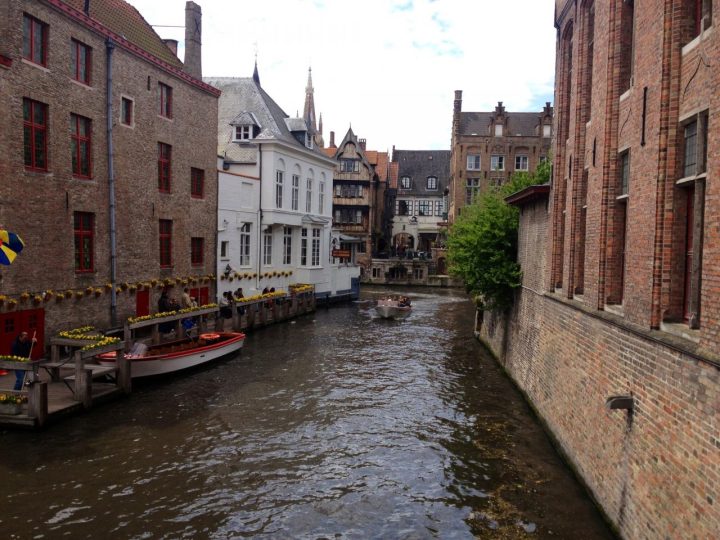


More impressions of the Brugge


Click on picture for the Belgian Waffle recipe